|
|
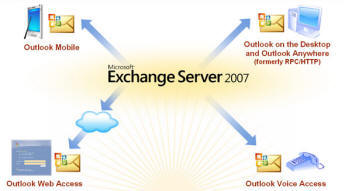
For most businesses today,
e-mail is the mission-critical communications tool that allows
their people to produce the best results. This greater reliance
on e-mail has increased the number of messages sent and
received, the variety of work getting done, and even the speed
of business itself. Amid this change, employee expectations have
also evolved. Today, employees look for rich, efficient
access—to e-mail, calendars, attachments, contacts, and more—no
matter where they are or what type of device they are using.
For IT professionals,
delivering a messaging system that addresses these needs must be
balanced against other requirements such as security and cost.
Enterprise security requirements have become more complex as the
demand and use for e-mail has increased. Today, IT departments
must contend with e-mail security threats that are wide ranging:
continually evolving spam and viruses, noncompliance risks, the
vulnerability of e-mail to interception and tampering, in
addition to the potential harmful effects of natural and
man-made disasters.
While security is clearly a
priority, IT is ever cognizant of the need to manage cost. Time,
money, and resource constraints are a fact of life as IT is made
accountable to do more with less. As a result, IT professionals
look for a messaging system that addresses both enterprise and
employee needs while also being cost-effective to deploy and
manage.
Microsoft Exchange Server 2007
has been designed specifically to meet these challenges and
address the needs of the different groups who have a stake in
the messaging system. The new capabilities of Microsoft Exchange
Server 2007 deliver the advanced protection your company
demands, the anywhere access your people want, and the
operational efficiency you, in IT, need.
Exchange Server 2007
Features at a Glance
|
Built-in Protection |
| Anti-spam and
Antivirus |
Built-in defenses
against spam and phishing e-mail as well as additional
integrated filtering and multi-engine scanning
capabilities provide advanced protection. |
| Compliance |
Controls for messages
in transport or requiring retention, and flexible
journaling help meet organizational, legal and
regulatory compliance requirements. |
| Business Continuity |
New data replication
capabilities (local and clustered) keep the system
highly available while limiting the need and frequency
for tape backup. |
| Confidential Messaging |
New encryption
features for both internal and Internet-based messages
help protect the confidentiality of messages in transit. |
|
Anywhere Access |
| Unified Messaging |
New Exchange Unified Messaging goes beyond e-mail to deliver
more types of communications to the inbox, including faxes and
voice mail, as well as offering new capabilities such as voice
access from any standard phone. |
| Web-Based Messaging |
A rich Outlook-like experience from any Internet connected
computer with a supported browser provides encrypted access to
the inbox, powerful search, and the ability to view different
types of attachments. |
| Mobile Messaging |
Exchange ActiveSync technology delivers an improved e-mail and
calendaring experience on mobile devices, while offering
enhanced device and security policy control. |
| Collaboration and Productivity |
Enhanced calendaring, out-of-office, resource booking, and
meeting scheduling capabilities simplify collaboration and
increase productivity. |
|
|